


In Memoriam

Nathaniel B. Childs
Nat Childs ’64 passed away on May 14, 2025. We will publish an obituary if it becomes available. In the meantime, here are remembrances in the form of reunion essays written by Nat:
Essay, 50th Reunion Book
by Nat Childs
May 2014
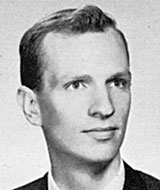
Nathaniel B. “Nat” Childs
1964 Yale graduation
I was already married when I graduated and headed for a job at MIT’s Lincoln Laboratories. That was a great place to work, and I enjoyed working on early communications-satellite electronics there, followed by work with integrated-circuit mask making. Lots of opportunity there, but eventually I burned out working at the same place day after day, year after year, and left the Lab in 1971, got divorced, and sold our house all at the same time with plans to live and move about in my recently partially outfitted 35-foot school bus.
With various alterations in that plan I lived for periods of time in Massachusetts, New Hampshire, and Vermont, remarrying in 1975 and traveling (in the bus) to Florida where we stayed with friends and for a time in an orange grove before setting out across the country, headed for the hills of Southern Humboldt County, California. With stops and adventures along the way (Appalachian foothills of NE Georgia, mountains of Arkansas, Rocky Mountain National Park, SE Oregon) we made it — bus motor getting sick just as we arrived.
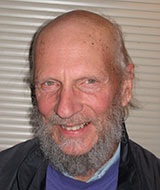
Nat Childs
in 2013
Within a few months of our arrival, 80 acres of land came up for sale right next to my brother’s place — and we got it. Headwaters of a creek on the land and an independent spring made it a great place. There I built a house in the early ’80’s. My son was born up there in the fall of ’78, the year we’d arrived. In ’85 I divorced again — a very difficult time for me — and I went to work in Garberville doing general electronic repairs. That business became my own around 1990. During those years I modified cordless phones and sold them with large antennas which enabled them to separate the handset from the base by up to five miles if a clear line of sight was available. This allowed people who lived beyond the reach of phone lines to have a home phone. Those were very popular and I continued to maintain them for people up until a couple of years ago — no one has requested a repair — and I think cellular phones have obsoleted that system. But it served a lot of people well for quite a while.
I closed my repair business in 1996 as it was becoming uneconomical to repair most consumer electronics, new things being cheaper. In 2001 I got a small Toyota motorhome which I used to cross the country three times, visiting my daughter in Virginia. In 2003 I met my wife Sandee at an art show she was holding in Death Valley, CA. She does amazing sculptures of reptiles from polymer clay and acrylic paint, and makes wonderful beaded jewelry. Among other things she is a fantastic vegan cook! We still live in the house I built except for wintering in our 31-foot RV in the desert near Quartzsite, AZ. Maintaining our CA home and various projects while in the desert occupy more time than I’ve got!
Essay, 25th Reunion Book
by Nat Childs
May 1989
Hi, everyone! Well, here goes — hope all these words interest some of you.
1964 seems like a long time ago — almost a different lifetime. When I left Yale that June, I went back to Massachusetts to a job with MIT's Lincoln Laboratory and a new (to my wife and me) house. Ann (first wife) was pregnant, expecting in January, so the changes were coming thick and fast. We took on three loans to get the house, and somehow managed to keep up with them as well as pay for the medical expenses associated with the birth of Elizabeth, on schedule on January 19, 1965. Political changes at Lincoln Laboratory between my hiring and arrival at work made my first six months on the job somewhat insecure. My marriage, by then some five years along, was still basically happy, though some stresses were showing. So, my first year after graduation was challenging, stressful, interesting, and satisfying. A turbulent mixture of positive and negative things.
The job at MIT lasted until 1971 — I left it at the same time my marriage finally broke up, and I sold my house. You've heard it said that life seems to have seven-year cycles to it? This seems to have been one of them. As my marriage became more difficult to understand and live with, I also tired of the routine of five-day weeks at the same place — so that I didn't feel I could give the Lab the energy it deserved. The Lab had been practically an ideal place to work, and I left it with some regret — but also with relief. The dissolution of my marriage, after a long and very painful period during which we both tried very hard to understand what was happening without great success, was also a relief. And so ended one phase of my life and began another very different one.
In 1967, experiencing the culture changes of the decade, I realized that after fourteen years of having a sore face every morning no matter how I shaved, I didn't have to do it anymore — and to this day I have not shaved again! While I was at it, I decided it would be interesting to see what I would look like if I let my hair grow as nature intended it — so while my beard was growing (scrawnily, as it turned out), so was the hair on my head (well ... except for the front and increasingly on top)! So, by the time of the Great Changes of 1971, I looked quite a lot different from the person some of you will remember.
Early in '71, I bought a big old flat-fronted school bus (Hingham, Mass. #12) to convert for living and travel, and began working on it. In September, when the Great Changes took place, I moved it and myself to a friend’s place, where I continued working on it, learned a little pottery, started doing T.M. (remember T.M.?), and met a new lady. Somewhere in this period was an interlude — a winter — during which I took the bus to Laconia, NH, and lived with some other friends, and lost some money trying to sell cosmetics in one of those pyramid marketing schemes, but then returned to Massachusetts. Moving in with my new lady, I stayed in Cambridge for a short while and then, following her to her new job in Middlebury, VT, bought an old farmhouse to renovate in a nearby town. That relationship lasted another year; renovation of the house took two — during which I also drove a local school bus. (Ever try starting a school bus at about 6:30am in the dark of a Vermont winter morning with the temperature well below zero? You had better not have forgotten to plug in the engine heater the night before!)
With the house sold, I parked my bus at a friend's place and began a period relatively free of responsibility. Proceeds from the house sale took care of my financial obligations for Elizabeth and left me something to live on, so I had time for reflection and reading, and a couple of relationships with women — one warm and positive which transformed itself naturally, one intense and painful but very productive in terms of what I learned from it. During the sixties I had visited California on business several times, each time taking some time off to spend with my brother, who had been there for several years. I felt drawn there from my first visit — and by 1977 was ready to get the bus together enough for cross-country travel. I had made a lot of good friends in Vermont, and really liked the area — but the extended winters, short growing seasons, and difficulty of making the money needed to set up a place, coupled with my feelings about California, combined to produce the motivation needed that summer. As this was happening, I met Linda, who was to become my second wife, with daughter Pearl, then 4 — in November we were married, and within a month drove south in the barely mobile old bus.
With a pause for Christmas in Massachusetts, we headed for Florida and a stay in Daytona beach. We were there for nearly two months working on the bus, and then moved on south to Jensen Beach for two particularly fine months parked in a grove of ripening oranges! More work on the bus, enjoyment of place, people, and ocean, and then off to northeastern Georgia for another month and a half of bus work in hot sticky weather, and wonderful people! From there, with pauses in Arkansas and Colorado, through northwestern Nevada and southern Oregon, we made our way (all 11 1/2 tons of us!) into northern California to southern Mumboldt County, and up into the Salmon Creek watershed, where my brother had settled. It is a gorgeous area — redwood trees in the valleys, hills climbing rapidly to between two and four thousand feet — very wet in the winter and dry in the summer months of good weather during which outdoor things could be done with no threat of rain, and winters which, except for extended wet periods, were gentle compared with New England. We did not know whether we would stay, but very soon after our arrival the piece of land next to my brother's came up for sale, along with the means to purchase it — so buy it we did.
The following years saw us have a son (Reuben), build a house, form close relationships with many people in the community, and develop an electronics-repair business in the town of Garberville, down in the valley and 20 miles from my home, which is 1800 feet up in the hills. My second marriage, another difficult and challenging relationship, ended seven years after it began (another of those cycles?), and I find myself today beginning a new relationship, and more stable and solidly content than I have ever been. Good relationships with my children, improving relationships with past wives, a successful if not especially lucrative business, plans for more business projects in the works, learning Aikido with the kids, and beginning a relationship with an easy-to-be-with woman — it's a promising future.
I hope someday to write about some of the things I feel I've learned — ! would like to think it could be helpful to others. There are a couple of things in particular I would like to mention here. First of all, I've watched through a number of severe disappointments, which finally led me to the following realization: One cannot feel disappointment without first holding some kind of expectation — without an expectation, there would be no cause for disappointment. This is not to be critical of expectations — it is only to establish the connection. The important point is that whatever expectation one may hold, it is the responsibility of the holder! No person can force an expectation on another! You may promise me faithfully that some thing or other is going to happen, but the choice of whether to believe you is mine and mine alone. If I choose to believe you, I form an expectation — and if your promise is not fulfilled, my disappointment follows from the choice I made myself — not from your promise. This does not relieve you from your responsibility in making your promise, but for my disappointment. I can express my disappointment and sadness, but if I blame you for them, I will be avoiding my own responsibility in the process, and I will in so doing put up a wall between us which you cannot take down, because it's built of my belief in your responsibility for my pain, which you cannot change. By taking responsibility, I can express my feelings in a way which is clean and does not build a barrier between us.
The second thing I want to say something about is of both personal and political importance. I'm reminded once again of Franklin Roosevelt's statement about fear — that the only thing we have to fear is fear itself, In particular, it is unrecognized fear, which is so damaging. Most people understand, I think, that panic is likely to be a destructive reaction to a fearful situation, because it narrows the attention so much that viable avenues of management of the situation are not seen. When one has a reaction to a situation (whether real or hypothetical) which is fearful, one must, I think, recognize one's fear — how else to avoid a panic reaction? In the world of politics, candidates, often fearful themselves, exploit and intensify the fear of people in order to build emotional support for themselves. Frank Herbert in the Dune series, said, "Fear is the mind killer" — and indeed it is! Unrecognized, it stops intelligent thought — narrows the attention to what seems the obvious solution, but which is usually one of the worst solutions! Consider, as just one example, the drug laws in this country: what feelings are aroused just by the mention of the subject? What if I suggest that they should be legal? The idea that it might be acceptable for drugs to be legally available frightens people — and they choose the first obvious course: suppress them. Look at the results. In natural law — the law of supply and demand — we try to suppress the supply! In obedience to that law, and prices increase. In response to price increases, people are motivated to increase the supply — and the people so motivated are those least respectful of the law and society! In order to support the suppression, the only information about drugs "respectable" media will publish is negative, and that tends to be exaggerated! People whose friends like a drug are persuaded to try them, and discover (as I did) that the publicly available information is misleading and inaccurate, and they feel distrustful of the establishment as a result, and tend to minimize the dangers in an overreaction. In tum, they are likely to introduce still more people to the drugs they have chosen.
Meanwhile, the network of supply grown underground, the money involved growing as attempts at suppression expand. Imported drugs support networks of suppliers in other less stable countries — and this has been dramatically subverted by those who possess the power of drug money! MUCH more could be said about the consequences of our fearful reaction to drugs — but the point has been made. What else can we do? Should we just make them legal and let things go their own way? Throw up our hands and let our youth drug themselves into oblivion (if, indeed, they should so choose)? Of course not — but what we can do, is begin by applying our intelligence to the problem with faith that we can solve it. We must recognize our fear, refuse to be controlled by it, and generate solutions which do not violate natural law or infringe on the personal freedoms of the individual which are at the heart of our country's greatness. Some have attempted to do this, but there is still to much fear around for intelligent solutions to be widely heard.
Well, drugs are just one example of how unrecognized fears lead to greater troubles, and I use it since it is such a dramatic example — but one can find many more examples in both public and private life if one really looks. I encourage one and all to look — as I am trying to do myself.
I think this ought to be enough — maybe too much. I'm not much for looking back, but I do have many fond memories of my days at Yale, even if I've not expressed them with financial contributions. Perhaps that will change when some of my plans materialize. I would like to think I could make it to the reunion, but vacations from a one-man private business cost twice — and I've three kids with educations to pay for (Elizabeth, now 23, is going back to school), so it's not likely I'll make it — and this thus becomes my chance to say "Hello" to all my old friends and acquaintances from the class of 1964. If any of you folks should find yourselves in Redwood country, you're close — you've got my phone number now, and it would be a pleasure to see and/or hear from you!