

In Memoriam

G. Gordon Davis
August 8, 2026
On this date we learned that Gordon Davis ’64 had passed away on May 14, 2026 of cardiac complications. Here are some remembrances:
Obituary
Press-Republican
September 14, 2026
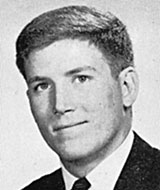
Gordon Davis
1964 Yale graduation
George Gordon Davis died at home in Santa Fe, New Mexico on May 14, 2026 in the company of his family. To the last moments he was himself, deeply engaged with his wife, Melissa Weller Davis, in the conversation that sustained them both for over half a century. He was 84.
To paraphrase Tennyson’s Ulysses, which he loved, Gordon was a part of all that he met; he drank “life to the lees.”
He was born to Marian Floyd Davis and Carlisle Ragland Davis in Richmond, Virginia on December 28, 1941 and raised in a devout Baptist family with his older brother “Cardy” Carlisle Ragland Davis and his older sister Jean Garnet Davis, later Jean Bynum.
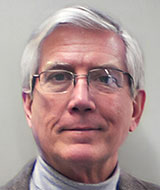
Gordon Davis
in recent years
In 1960, Gordon headed north to college at Yale University and fell in love with a new muse: ideas. He made some of the most meaningful and enduring friendships of his life and, in his telling, he barely escaped with an engineering degree. His heart was in history, philosophy, literature, and in the debates and discussions joined with gusto in Yale’s classrooms, dorm rooms, and dining rooms.
When his father died late in his senior year, Gordon acquiesced to his deathbed wish and scrapped plans for a philosophy Ph.D, instead pursuing a JD at the University of Virginia. He performed well, and upon graduation he joined the United States Army to fulfill his ROTC obligation.
The Army was another revelation, much as Yale had been, in particular because he was made an intelligence officer and seconded as an analyst to the CIA. He had access to novel types of information and ideas and was trained in a new analytic discipline. For the rest of his life he spoke fondly of this short period as one with outsize influence on his professional and intellectual interest. Of course, it was also when he met Melissa.
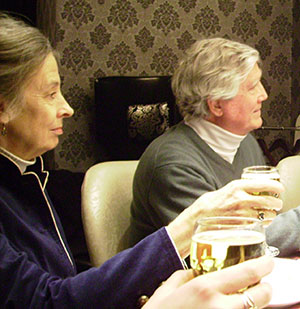
Melissa and Gordon, 2014
It was because of a sports car. Despite his smoking and motorcycle habits, it was love at first sight. They married a little more than a year later. Children arrived on two-year intervals, George in New York City, Charlie and Victoria in the Adirondacks of upstate New York. They renovated a 20th-century farmhouse in Cossayuna, a 19th-century home in Wadhams, a 19th-century schoolhouse in Westport, and built a new home from the ground up, which Gordon designed, wired, and plumbed, the kids alongside.
To his children, Gordon passed on his love of the outdoors, leading the family on hikes in the Adirondack High Peaks, teaching them to sail and windsurf, to downhill ski, to cut firewood and build fires. He was an early adopter of computer technology in the 1970s and 1980s, teaching his family as he learned. He made the family breakfast each morning, and joined the family for candlelit dinner nearly every night.
Melissa did everything else, nourishing the bellies and nurturing the minds — artistic and athletic — and social endeavors of the kids. The home overflowed with books and creative projects. Melissa grew gardens, and everyone cooked.
After the CIA and marriage with Melissa, Gordon began practicing law, first as a corporate attorney at Shearman and Sterling in New York City, then at Clark Bartlett and Caffry in Glens Falls, NY, before landing as counsel to the Adirondack Park Agency, another arch wherethrough gleamed “that untravell'd world” of natural-resource and land-use law that would become another passion, another outlet, another field to which Gordon contributed over the next four decades. In 1981, he co-authored a book, Protecting Open Space, with Richard A. Liroff.
Gordon often claimed ambivalence about lawyering, notwithstanding important victories in the courtroom, but he steadfastly championed the rule of law, and it provided the foundation for his professional endeavors throughout his adult life. Whether leading a general practice as an attorney in the Adirondacks, founding an international sustainable-development consultancy, leading NGOs in Beijing and Hong Kong, or teaching courses at the State University of New York, University of Chicago, and Northwestern University, the law, the environment, and public policy remained his focal interests.
Another intellectual revelation began in 1987 with a visit Gordon and Melissa made with a group of American lawyers to China. From that time on, rarely a year went by that Gordon did not visit China or the Russian far east, often for extended periods, to provide and develop expertise on rule of law and environmental law and policy. It was through these engagements, despite not speaking Russian or Chinese, that Gordon discovered another passion and skillset, diplomacy, which became another arrow in his quiver at the end of his teaching career, when he taught courses on Chinese international policy.
Gordon lived out his retirement in Chicago and Santa Fe true to all the passions that gave meaning to his life, first and foremost his wife Melissa. He brought her coffee and the New York Times every morning, and their conversation picked up where it left off the night before. In those years, he published twenty-five op-eds in the Santa Fe New Mexican, two volumes of a memoir, and a collection of poetry. Every night, they cooked together before he read her to sleep.
Gordon was a loving husband, father, and friend. A passionate intellect, debater, teacher, and mentor. A writer and designer and builder. A champion of morality, justice, the rule of law, and American soft power. An entertaining storyteller and commanding orator capable of extemporaneously reciting verses and treatises eighty years and more after committing them to memory.
He will be missed.
Biography
Amazon.com
Here are biographical details published by Amazon.com in connection with Gordon’s book Everything Has a LIfe:
George Gordon Davis, known as Gordon, was born in 1941 in Richmond, Virginia, where he attended the public schools. He is an engineering graduate of Yale and of the University of Virginia School of Law. His twenty-year law practice, first on Wall Street, then as general counsel to the Adirondack Park Agency, then as a private practitioner in the Adirondacks, added an international dimension beginning in 1991, when he served as chief legal officer on a series of sustainable development programs in Russia, China and Mongolia.
Thereafter, from 2002 to 2004 he directed a rule-of-law program for the American Bar Association in Beijing. And from 2006 to 2008 he directed a democracy-building program in Beijing and Hong Kong for the National Democratic Institute.
He has published and lectured in Asia, Europe, and the United States on environmental law, rule of law, democracy building, and other topics. He served as adjunct faculty at the State University of New York (1975-1990), the University of Chicago (2000-2009), and Northwestern University (1998-2017).
Gordon has been married to Melissa Weller Davis, a non-governmental-organization expert, for nearly fifty years. They have three fabulous children, George, Charlie, and Victoria. Gordon and Melissa now split their time between Evanston, Illinois and Santa Fe, New Mexico.
Here is Amazon’s description of George’s book Everything Has a LIfe:
Gordon Davis grew up in a conservative Southern Baptist family in Richmond, Virginia, but has strayed from those beginnings into foreign intelligence, the practice of law on Wall Street, and then in the Adirondacks of New York, teaching at several colleges and universities, as well as international development work.
The book explores Davis's family roots and childhood, his early overdose of religion, and the segregated world of Richmond, Virginia in the 1940s and 50s. It describes the Southern gun culture and Davis' developing disenchantment with it. It recounts his passage through the turbulent sixties, his participation in the early years of environmental law and politics in the seventies, and his transformation from practicing lawyer to advocate for environmental protection and sustainable development in Asia.
Davis's migration from the political right to left, and from city to country, coincided with a growing interest in international advocacy. For twenty years he participated in a series of initiatives to promote the rule of law and democracy internationally, with emphasis on Russia, Mongolia, and China.
This personal memoir is Davis's attempt to render an account of sorts and “make sense” of his life, and he offers thoughtful commentary on the rich experiences through which he has passed.
Essay, 60th Reunion Book
by Gordon Davis
May 2024
Turns out I’ve been more of a spectator than a player, and as such, one who identifies less and less with the unfolding events of our world. From a young, optimistic Southern Baptist with high expectations and intentions, I’ve metamorphosed into an old pessimistic atheist quite certain that our country, our society, and indeed our global civilization, are all on the brink.
With every year the distance widens from my Richmond roots. Thanks to such groundbreaking publications as The 1619 Project I've come to understand that my public-school education in Richmond, by design, distorted Southern history by redacting events such as the Tulsa, Wilmington, and New Orleans massacres, the saga of the Scottsboro Boys, and even the lynching of Emmet Till, an atrocity that actually played out during my middle-school years. The apotheosis of Confederate leaders by Daughters of the Confederacy, now finally in retreat, skewed my early understanding of patriotism and heroism. I've worked at countering the racism I grew up with but still see it rampant in our country's politics.
My epiphany concerning America’s treatment of our Indigenous Peoples was thanks to activists such as Dee Brown, Vine Deloria, and, yes, our Sam Deloria, Yale '64. Here in New Mexico the remarkable mix of Anglo, Hispanic, and Indigenous is proof positive that we can live together productively, if we can somehow place in abeyance the murderous penchants of our species.
I’ve come to question the wisdom of so many features of our revered Constitution that seem totally exempt from amendment, Senate representation and the Electoral College, for two. I am profoundly in doubt of American exceptionalism and profoundly question the righteousness of the foreign policy that spawned the Vietnam War, the Afghan War, and the Iraq War. I have recoiled, aghast, from the widespread denial of climate change for all these years. And with the upcoming Presidential election, I deeply fear for such of our country's democratic practices that managed to survive the abominable Trump Presidency.
Sorry, but I see few prospects for the future of our country, our society, and indeed our planet. For me, family is the one bright light. Melissa, my gorgeous wife of 53 years, is a perpetual joy, and my three marvelous children, George, Charlie, and Victoria, are remarkable people as well as dear supporters. I wish them luck in the coming years, years that most assuredly will not be easy.
Essay, 50th Reunion Book
by Gordon Davis
May 2014
After Yale, University of Virginia law school, and a two-year military commitment at the Pentagon, I married Melissa Weller, a linguist and Middle East expert from Colorado. After I’d practiced law on Wall Street for a time, we moved to the Adirondack region to raise three wonderful children. I discovered that I was an environmentalist, became an early practitioner of environmental law, and lucked into some environmental projects in Russia, Mongolia, and China that kicked off twenty intermittent years promoting sustainable development, rule of law, and democracy, mostly in Asia. The foreign work overlapped nearly four decades of adjunct teaching at the State University of New York, the University of Chicago, and Northwestern University. My ongoing teaching responsibilities in the Environmental Policy and Culture program at Northwestern, unfortunately, may prevent my attendance at our 50th reunion.
Over the years I published a number of articles on subjects ranging from sustainable development in Asia to the real-property market in Vietnam, and a couple of books, the most recent of which, Everything Has a Life, is a memoir, available in ebook form at Amazon. It documents my movement away from the Virginia conservatism I brought to Yale, and my embrace of the cluster of left-of-center views that characterize me today. It is relatively silent on my time at Yale, other than to acknowledge that, unlike most classmates, I had contempt for William Sloan Coffin, whom I considered a phony. I have never changed that opinion much, even as my opinions on other matters evolved. But the book does describe how a naïve Southerner steeped in fundamentalist Christianity made his way through seven decades to become an atheist left winger at once disillusioned with politics and disappointed with our country, while joyful and grateful for a warm and loving family, cherishing a cornucopia of bright memories.
So what of Yale? Was it the right choice? Certainly it was four years of euphoric experiences and the launch pad for lifelong friendships. But for me, it was also where two roads — humanities and science — diverged. I thought I had chosen the one less traveled by — science. But peer pressure at Yale is formidable, and it nudged me relentlessly toward the humanities. Even as I completed an engineering degree, I emerged from Yale’s cocoon with vague ambitions to get beyond the comfort of numbers and precision. Pity. So much effort, so much learning, never appropriated to any practical end. Unless, of course, you consider that I still do my own automotive, plumbing, and electrical work, program my own computer, and read articles in the Science Times for pleasure. Hey, wait a minute. Wasn’t it a liberal-arts education that was said to have little practical use but informed a life? I studied engineering at Yale. I suppose I was like the the cowboy who explained why he dove into the cactus patch by saying, “It seemed like a good idea at the time.” And indeed it was.