

In Memoriam

Richard R. Howe
Dick Howe ’64 died on March 29, 2026 in Morristown, NJ. His wife Liz notified us as follows:
I wanted to let you know that Dick passed away last Sunday, March 29 at Morristown Hospital. His heart condition and weakened kidneys were too much in the end. Our grandchildren were very involved at the end. He never slept alone at night. Sometimes there were three in his hospital room. The four, who have lived with us for the last 15 years, range in age from 20 to 28.
As remembrances, here are posted two essays that Dick wrote on the occasions of two Yale reunions. No obituary has been published.
Essay, 60th Reunion Book
by Dick Howe
May 2024
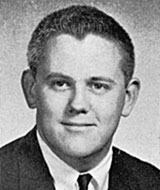
Dick Howe
1964 Yale graduation
I have spent my career as a corporate lawyer in New York City, where I still have an office, but I have had another life as a musician. I was trained from an early age as a concert pianist and continued to play the piano at Yale and while studying at Harvard Law School.
When I graduated from law school and moved to New York, I continued to play the piano and attend concerts. In 1971 I moved to New Jersey and started to look for musical opportunities there.
In the 1990’s my wife and I started to attend symphony concerts in New Jersey given by the New Philharmonic of New Jersey, a small orchestra comprised of accomplished musicians largely from New Jersey, together with outstanding piano, violin, and other soloists. They generally had four performances per season, and the conductor, Leon Hyman, always introduced the pieces with a short description.
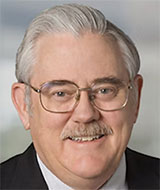
Dick Howe
in recent years
The orchestra held annual fund-raising events to support the performances. These events soon included an auction of the opportunity to conduct the orchestra for one piece during the following season. At first, I let others bid on this, but after seeing them in action for a couple of seasons, I decided to bid and won.
In 2001 I stood on the podium to conduct my first performance, an overture by Rossini. Shortly afterwards, a review of the concert was published in the Classical New Jersey Society Journal. The reviewer praised my performance, saying that I “actually led” the orchestra and “gave some useful cues and got through tempo changes cleanly and decisively,” and he encouraged me to do it again.
I did, and continued to support the orchestra and bid on conducting opportunities, and I won the auctions as the former bidders gradually dropped out. I got to know the members of the orchestra well, and they knew me and could follow my lead. My style was different from Leon’s, but that did not bother the musicians. I was able to put feeling and emotion into the works I conducted, and the orchestra responded well. My annual appearances were advertised in local newspapers, and I attracted a small following among the audience. My performance of the overture to Glinka’s "Russlan and Ludmilla" in 2003 received another positive review in Classical New Jersey. Over the years I conducted works by Handel, Berlioz, Rossini, Glinka, and Mendelsohn.
In 2010, Chris Christie became the governor of New Jersey. One of his early acts was to cut funding for arts organizations like the New Philharmonic, and the orchestra folded after the 2010-2011 season. That was the last time I conducted an orchestra.
Conducting an orchestra was a great experience for me. Good conductors bring vitality to their performances by transmitting their conception of the music to the performers who respond with appreciation and careful attention. Some orchestras perform without a conductor, but I believe that conductors can bring a vision and strength to a performance that a leaderless group cannot have.
Essay, 50th Reunion Book
by Dick Howe
May 2014
I was born in Portland, Oregon and grew up in Los Angeles where I attended University High School, then one of the best public schools in California. I was well prepared for Yale.
At Yale I began in Directed Studies in Science which had small classes of about a dozen students and close contact with outstanding professors. After focusing on physical sciences I migrated to social science and eventually majored in Political Science and Economics, which then had only about 15 students but many outstanding professors.
My Yale experience was marked by the excitement of the Kennedy presidency and wide attention to societal issues of racial and economic inequality. I worked in Washington in the summer of 1963 where I met my wife Liz, as well as various Senators, Congressmen, and the President. Kennedy’s assassination in November 1963 was a traumatic event, and the Vietnam war which followed soon after divided the country in a way that it has never fully recovered from, which makes my years at Yale glow even brighter in retrospect.
After Yale I went to Harvard Law School along with several Yale classmates. Harvard featured large classes and little opportunity for close contact with professors. Attending Harvard also made me appreciate Yale more.
After graduating from law school in 1967 I went to work at Sullivan & Cromwell in New York where I have been ever since. I retired as a partner in 2009 but am still practicing as of counsel. I have worked principally in corporate finance, mergers, and acquisitions. My skill was bringing people together to find commonality. I have represented financial and industrial companies, domestic and foreign, have traveled to all continents of the world, and lived in Australia for a period.
Besides practicing law I have been actively involved in pro bono and international projects focusing on legal issues throughout my career. In 1992 I hosted a conference in Moscow on “Banking in a Market Economy,” which was repeated the following year in Mongolia. One of my more memorable experiences was to act as occasional guest conductor of the New Philharmonic of New Jersey between 1999 and 2010, before the orchestra closed in 2011.
My wife and I have now enjoyed 49 years of happy marriage together. We had one child, Richard Jr., who graduated from Yale in 1990. His four children are not ready for college yet, but I fear that they will not have the opportunity that my generation had to experience great improvements in their lives resulting from living in the world’s leading economic, cultural, and military power. Today our country is characterized by divisive hyperpartisanship that has weakened our economy and diminished our standing in the world and stands in sharp contrast to the Yale I attended 50 years ago, where people were still divided but showed respect for each other and used their intelligence to resolve conflicts. Those were truly the shortest, gladdest years.