


In Memoriam

Jonathan Leader
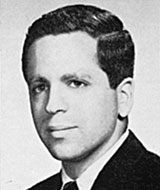
Jonathan Leader
1964 Yale graduation
We learned of Jonathan Leader’s death on September 7, 2025. He had died on March 28, 2025. He joined our class in 1962 when he transferred from Brown University to Yale at the beginning of his junior year. He went on to Harvard Business School after graduating from Yale, and ultimately became the CEO of Liberty Capital Management, a financial services company in Santa Ana, California.
No obituary is available, but we offer the following remembrances:
- Speech by Jonathan at a bar mitzvah
- Essay, 60th Reunion Book
- Essay, 50th Reunion Book
- Essay, 25th Reunion Book
Bar Mitzvah speech
by Jonathan Leader
The father at the bar mitzvah wrote the following tribute to Jonathan:
This past Friday, March 28, 2025, we lost a man whose presence was quiet but powerful. A man who saw people — not labels. A man who reminded us what it means to truly show up for others. Mr. Jonathan Leader.
At my son Mendel’s bar mitzvah, Jonathan spoke with deep humility, warmth, and honesty. He shared how our connection began with a single phone call. He didn’t know me. But he took the meeting. He listened. And from that moment, his heart was in it — not just for us, but for the Jewish community of Kishinev.
He reminded everyone in the room that every Jew is a Jew. That unity doesn’t mean sameness — it means showing up for each other with compassion, no matter how different we may seem on the outside.
He spoke about his wife Dina, about legacy, about responsibility, and about how proud he was to stand beside my son in that moment. He saw the soul in each person. He felt the weight of history and the hope of the future — and he lived his life accordingly.
Jonathan, thank you for the way you saw us. The way you gave. The way you led.
May your memory be a blessing — and may we all strive to live with even a fraction of your heart.
Essay, 60th Reunion Book
by Jonathan Leader
May 2024

Dina and Jonathan Leader
on their wedding anniversary in 2023
The composition of the Yale Class of 2028 and our class in 1964 exemplifies the societal changes that have occurred between our graduation sixty years ago and today. Our class, if I recall correctly, consisted mostly of students from private schools, with only a handful of African American and Asian students, very few foreign students, no Native Americans, and no women. In other words, the majority of our class were "privileged white men". Today, Yale's student body reflects the diversity of society, which I believe is the most significant change over the past sixty years.
To be concise, I will list the other major changes that have taken place since 1964 without elaboration:
- The role of women in society
- The decline of the nuclear family in America
- The sexual revolution, especially in regard to gender identity
- The erosion of respect for authority, particularly among young people
- The transformative impact of technology
- Globalization
- The role of immigrants in America and Europe
- Medical advancements
- The growth of entrepreneurship
- Wealth disparities
- Islamic extremism
- An international state of constant conflict with multiple enemies.
While every generation feels that their lives have been disrupted by subsequent ones, I believe this sentiment is particularly true for our generation. For better or worse, we grew up in a time of great conformity, with President Eisenhower, coats and ties, and shows like "Leave it to Beaver" and "Father Knows Best" as the norm. All the aforementioned changes have forced us to question our original beliefs and either adapt or be left behind.
The change that has troubled me the most is the loss of respect for authority or experience. Young people today seem to believe they possess the wisdom of all ages and hold the sole possession of "Truth." Conversely, I cherished the symbols of authority at Yale — the historic buildings, the scent of aged books in Sterling Library, and the seemingly distant professors who wore three-piece suits. It made me feel connected to greatness. Now, the study of Romantic Poets, for instance, has been replaced by the Study of Happiness, whose enrollment was so great that the class professor had to take a sabbatical due to the overwhelming class sizes. Could it be that the students themselves were dissatisfied with the lack of structure and authority in today's world?
Each of us had our favorite professors at Yale. Mine was Hajo Holborn, a non-Jewish refugee from Nazi Germany who came to the United States early in the War and joined the OSS, the predecessor agency of the CIA. Professor Holborn, whose daughter was temporarily the President of Yale in a day when women could not become Ivy League presidents, taught European History 51-52, “Europe From the Congress of Vienna.” He lectured, without notes, on everything from the caloric needs of the European peasantry to Mozart. When I walked into the Sterling Law Auditorium every Monday, Wednesday, and Friday at 11:10, I felt that I was learning at the foot of greatness. I wonder how many such instructors exist at Yale today.
I am not opposed to change. After a successful thirty-year career on Wall Street, I taught at the college and high-school levels. I recognize the incredible benefits of new technologies, particularly in medicine. I do not align myself with any political party and I lament the significant wealth disparities in our country. However, I also hold dear those “shortest, gladdest years of life”.
Essay, 50th Reunion Book
by Jonathan Leader
May 2014
Immediately upon my graduation from Harvard Business School in 1966 I accepted an offer to work in Yale’s Development Office under a man named Howard Phelan. Howard had a model for fund-raising: he felt that Yale graduates went through a three-stage process of wealth accumulation, wealth consolidation, and wealth distribution. Little did I realize at the time that this pattern would accurately describe my future financial and philanthropic life.
Following two years of working at Yale (and simultaneously teaching at New Haven College), I began a thirty-year career on Wall Street, working at Goldman, Sachs and Salomon Brothers before opening my own registered investment advisory firm, Liberty Capital Management. I married a Wellesley girl, had two smart, beautiful daughters, joined an exclusive country club, and did not pay much attention to those in society that were less fortunate than myself.
Essay, 25th Reunion Book
by Jonathan Leader
May 1989
Next to my family, my experience at Yale is probably the most enduring event in my life. Yale opened new worlds to me, intellectually, socially, and business-wise.
We were privileged to be at Yale during the period of its greatest strength in the humanities. As a history major and a literature minor, I studied with such great names as Holborn, Blum, and Morgan. I was in an eight-man English seminar with Robert Penn Warren. The thrill of hearing these men has never worn off, and it has provided me with a legacy I cherish today.
On a social (or people) level, the Yale experience continues to provide me with a bond to graduates worldwide. In this country or overseas, a fellow Yale alumnus whom I don’t know often reacts to me as a member of his extended family. This, of course, is highly heart-warming.
The impact in business of my having gone to Yale is dramatic. It has been said that in the absence of an hereditary aristocracy, Americans look at educational affiliations (i.e., college and graduate school) to help in evaluating people they meet. As a practical matter, I have found that my degree from Yale automatically elevates me in the eyes of people I encounter for the first time.
In summary, no institution could have provided me with a better start for the life I try to lead. In terms of stimulating my intellect, enlarging my circle of acquaintances, and helping me in business, the Yale experience continues to influence my life on a daily basis.