


In Memoriam

Travis A. Meredith, Jr.
Travis Meredith ’64 died on March 27, 2026 after a long struggle with Parkinson’s disease. Here is his obituary and a description of his memorial service, followed by essays that he wrote for two reunion books.
- Obituary
- Remembrance, John Aram ’64
- Essay, 60th Reunion Book
- Essay, 50th Reunion Book
Obituary
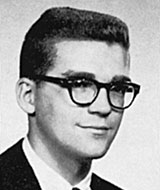
Travis Meredith
1964 Yale graduation
Travis Ashby Meredith, Jr., MD, age 84, of Ft. Myers, Florida, passed away peacefully. Born in Welch, West Virginia, he lived a life marked by intellectual curiosity, resilience, and deep devotion to family.
Dr. Meredith is survived by his beloved wife, Karen, and his children, Randy Meredith, Jeremy Meredith, and Bennett Lareau.
He earned a Bachelor of Arts from Yale University and his medical degree from Johns Hopkins Medical School. He completed his internship at Columbia Presbyterian Hospital, followed by a residency in ophthalmology at Johns Hopkins and a fellowship in retinal vitreous surgery at the Medical College of Wisconsin.
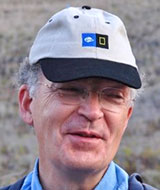
Travis Meredith
in recent years
Dr. Meredith devoted his career to academic medicine, holding positions at several distinguished institutions, including his alma maters, Emory Medical School and Washington University. His career culminated in his role as Chair of Ophthalmology at the University of North Carolina at Chapel Hill. Widely admired and deeply respected, he received numerous awards and was revered by colleagues, students, and patients alike for his skill, leadership, and commitment to advancing his field.
A man of remarkable determination, Dr. Meredith continually sought to improve himself and broaden his understanding of the world. He overcame profound early hardships, including the loss of his mother and brothers at the age of twelve, with the resilience and strength that defined his life. In later years, he faced Parkinson’s disease with courage and discipline, never missing a day of exercise — even while traveling.
Known for his sharp wit, he had a gift for delivering the perfect joke at just the right moment. Outside of medicine, he enjoyed tennis, skiing, playing bridge, and music — especially the drums and guitar. He was also a devoted fan of Tar Heel basketball.
Above all, he cherished his family. He shared a deep and enduring love with his wife, whom he affectionately called his “eternal valentine.”
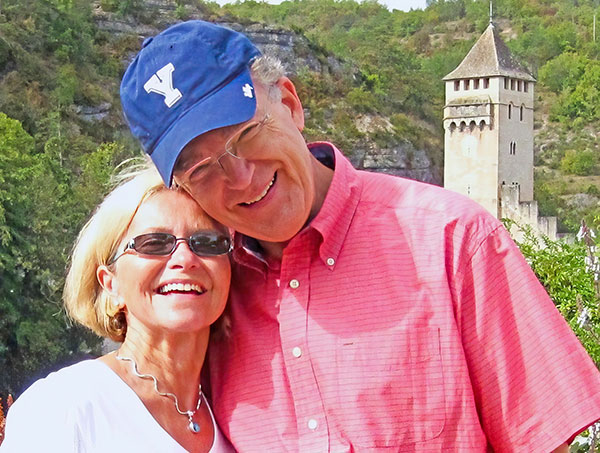
Those wishing to honor Travis’s life may make a donation in his memory to the Michael J. Fox Parkinson’s Foundation, which is supporting important research in the field.
Remembrance of Travis Meredith
by John Aram ’64
June 20, 2026
A Celebration of Life was held for Travis A. Meredith ‘64 at St. Michael’s and All Angels Church on Sanibel Island, FL, on Saturday, June 20, 2026. Travis’s life was honored by his wife, Karen, his children, Randy, Jeremy, and Bennett and their families, as well as relatives and friends from many places and different stages of Travis’s life. Remembrance comments were given by Travis’s senior-year roommate, John Aram ‘64, and by Peter Densen and Stuart Fine, both professional associates of Travis and long-term friends of Karen and Travis. Participants recalled Travis’s integrity, determination and discipline, professional accomplishments, and delightful sense of humor. He was very warmly recalled and will be affectionately remembered.
Here is the remembrance of Travis presented at the Celebration of Life by John Aram ’64, his senior-year roommate:
I don’t remember the first time I met Travis. It had to be in the fall of 1960 or spring 1961 when we were being initiated into our new lives as Yale College freshmen.
Travis and I eventually fell into the same group of friends that included Rick Kroon and the late Jim Curtis, whose wife, Nancy, is with us today. By senior year, the four of us decided to bid, as roommates, for a suite of two single bedrooms, a room for two with a bunk bed, and a common living room … fortunately equipped with a bar.
After drawing straws, Travis and I shared the double (I had the upper bunk), and I am glad that we did. I came to Yale as a scared stranger and left, perhaps a bit less scared but most importantly no longer a stranger, in no small part due to a lifelong friendship with Travis.
Travis and I shared some common life experiences. We both hailed from towns in small states — Travis came from West Virginia, and I came from Idaho. We were both raised as Episcopalians. Academically, we both worked like dogs — Travis studying the likes of organic chemistry and me struggling to understand the mechanics of economics. We both had the good fortune to meet and somehow win over two wonderful, talented, supportive, and independent women with whom we have shared our lives and raised families.
Travis’s ability to overcome the unimaginable loss, at age 12, of his mother and siblings in a car-train accident gave me an understanding of his strength of character. Travis excelled with undeterred determination and self-reliance in spite of great personal tragedy. Quietly, he became a model of strength for me during college.
Subsequent years are a collage of snapshots in my mind — my wedding in which he was best man, his wedding in which I was best man, visits to the Meredith home in Baltimore, Milwaukee, Atlanta, Chapel Hill. My wife Dorothy and I have enjoyed memorable travels with Karen and Travis — oceans, rivers, lakes, and mountains in Europe. It was through Travis that Dorothy and I developed and currently share a bond of affection for Karen.
Trav had a remarkable memory for stories and jokes, and he enjoyed sharing his deep repertoire with friends. In sports, he played basketball, tennis, skiing, and pool; in music, he played the drums, guitar, and recently the keyboard. His rich bass voice contributed to the chorus at Shell Point, and he greatly enjoyed playing bridge. His memoir consists of meaningful incidents from different stages of his life, written with style, humor, and sensitivity.
As we know, Travis had the misfortune to suffer a series of medical maladies. Through periodic visits, I watched the trajectory of his sad deterioration. Feeling helpless to alleviate his suffering or to revive his spirits, I recognized, once again, his fierce determination — in this context to overcome his illnesses. I try to reconcile myself to his loss with these thoughts:
My morning walk passes by
a tall, straight pine,
precariously rooted,
on the edge of a rocky ledge.
Whether by torn roots,
failing strength,
or time itself,
the tree will come down
one day,
repaying, like my friend Travis,
a debt incurred by trees and people
for the privilege of living.
I will not be able to visit Travis again, but I will carry his presence with me, grateful for the serendipitous, fortuitous chance that he entered and influenced my life.
Essay, 60th Reunion Book
by Travis Meredith
May 2024
“Tsunami”
Members of the 1960 high-school graduating class of my small West Virginia town approached college with the usual trepidations. Most chose local colleges where there were already friends in residence. My path was different. I was going to college an 18-hour train ride away, one I had never visited and where I knew no one.
While I expected a different experience from high school, I was unprepared for the tsunami of change about to engulf me. All of my experience, knowledge, and past accomplishments were swept away by a wave of new expectations, different culture and customs, and greater academic demands.
Within the first few days the Yale Class of 1964 gathered together for a welcome by the Dean. He proudly reviewed the diversity in the class. I was the sole public school graduate from West Virginia.. As I looked around the hall I realized that inadvertently I had found a way to stand out in this crowd. We had been instructed to wear a dark jacket so I was wearing my new suit purchased from my hometown men’s shop. When I consulted them about what to buy the owner said confidently “They are wearing a lot of grey flannel up there.” As I looked around the hall, mine was the only grey flannel suit to be seen in the sea of tweeds and herringbone patterns.
Yale’s philosophy was that Yale scholarship students should work ten hours a week to earn part of the tuition and also borrow a portion of the fees. As a National Merit Scholar I didn’t need to work or borrow but a little extra cash was welcome. Scholarship men were assigned jobs clearing the other students’ dirty dishes at mealtime. Thus my interaction with most of my classmates was to clean up after them. I learned what the “little people” in society feel when they are ignored as they go about mundane tasks. (Occasionally I was assigned a higher-profile job ladling soup on the food line.)
A few students, mostly preppies, wanted to be subversive and express their uniqueness in their dress. The local coop accommodated them by designating one corner as The Individualist’s Shop. I was amused to see that the only items for sale were blue jeans and moccasins, a very limited uniform. I reminded myself that I was at Yale so I didn’t have to wear blue jeans for the rest of my life.
Then we started classes. Having always been comfortable in the classroom I looked forward to beginning. My first class was at eight o’clock and the professor greeted us with a “bonjour.” I waited to be instructed in English on how the class would be conducted. That never happened. The entire class was conducted daily in French. I became more and more frustrated and frightened, new symptoms for me in academics.
Only recently, when I was taking a linguistics course, did I learn that the human brain is not well equipped to learn another language past the age of 9 or 10. The ability to learn language is best in three- and four-year-olds and then declines significantly in late childhood, so the decks were stacked against us.
Math had always been a favorite subject that came easily for me. The Yale calculus teacher was the author of our text book, a thin volume with many problems and few explanations. In the first problem set was a head scratcher: Prove a=a. It seemed pretty obvious to me without needing some complicated proof. Several weeks later I asked my first and only question in the class. He replied: “That seems pretty obvious” and proceeded to fill up three chalk boards with the proof. Obviously the professor and I had different ideas of the obvious.
And thus went the first few weeks!
Essay, 50th Reunion Book
by Travis Meredith
May 2014
“The Ivy League Was Another Planet.” This recent Wall Street Journal headline captures my introduction to Yale in the fall of 1960. My Yale experiences were a complex tapestry. The environment was stimulating and challenging, though simultaneously threatening and stressful. The teaching was often fabulous and I was never bored. To interact with bright minds on a daily basis was the best preparation for an academic career in medicine. The emphasis on liberal arts led me to a degree in history which has provided a more rounded approach to life than I would have had with a science degree alone.
Johns Hopkins University School of Medicine was the next stop on my career path. After two years I took a year off to pursue research in cardiology and develop life away from the classroom and library (i.e., girls). I loved the research and returned for the clinical years better grounded and prepared.
For internship I went to Columbia Presbyterian in New York to study internal medicine before returning to Johns Hopkins for residency in ophthalmology. My career choice surprised me, but I was mesmerized when I first examined the eye with a microscope and still love its beauty and complexity. Ophthalmology is surprisingly encompassing as a medical specialty. The problems are often complex but with the examination techniques now available problems can be defined almost to the cellular level.
Much of my career has been in academics where I have found that teaching recaptures the intellectual excitement that I first experienced at Yale. I have helped train over 100 residents and 40 fellows. I’m now training the children of some of my fellows!
Pursuit of career interests led to several moves. After working for ten years at Emory University I returned to Johns Hopkins briefly as chief of vitreoretinal surgery. I spent nine years in private practice in St. Louis but heeded the call to return to academics in 2000 when I became Chairman of Ophthalmology at the University of North Carolina. Over the succeeding eleven years we were successful in tripling the size of the department and my successor has sustained this trajectory, recently moving the department into a new Eye Center.
Being in academics provided opportunities for travel to many countries for meetings and lectures. I’ve been active in professional organizations and have served as President of the Association of University Professors of Ophthalmology and of the Macula Society. I was also chair of the Council of the American Ophthalmological Society.
In retirement I’m catching up with long-neglected outside interests, taking piano and voice lessons and singing with the Chapel Hill chorus. I play bridge and tennis, and I continue editorial work and seeing patients one day a week.
Fortunately one of the lines of “Bright College Years” has been true: “But time and change shall not avail, To break the friendships formed at Yale.” Our group of four from senior year at Berkeley meets almost yearly for the past several years, bringing back many great memories.